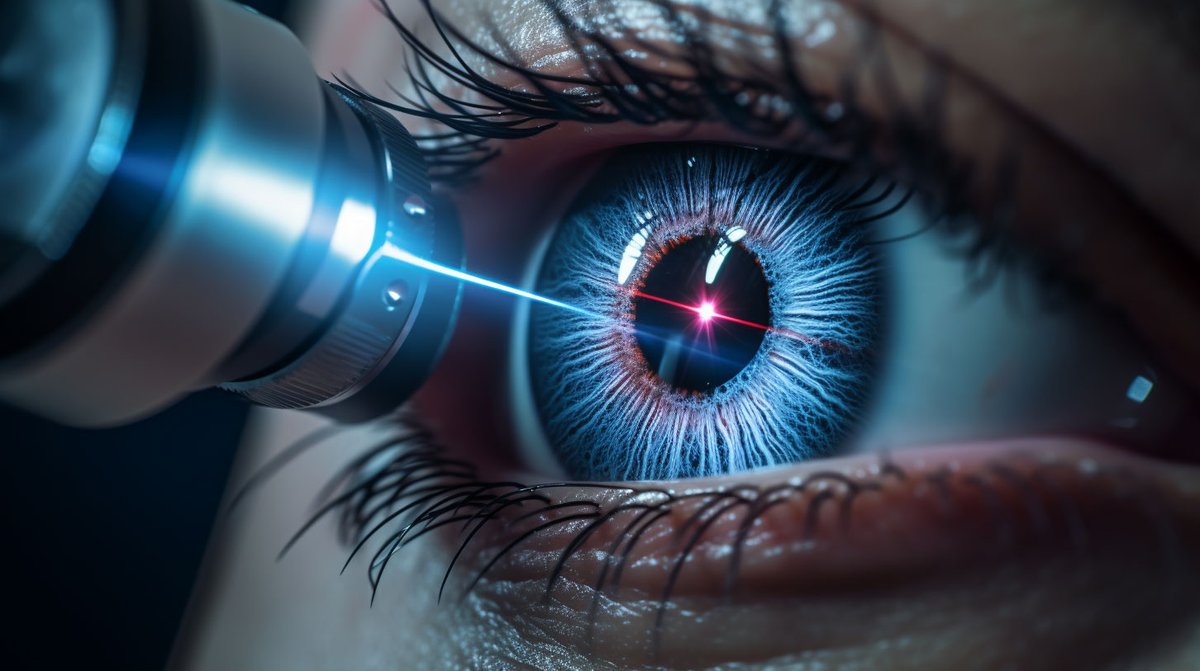
For decades, the promise of crisp, clear vision without glasses or contacts has often led people down one path: laser eye surgery. Yet, as groundbreaking as procedures like LASIK have been, they're not for everyone, and they come with their own set of considerations. This leaves many searching for alternatives to laser eye surgery and comparative analysis that can offer similar benefits without the same limitations. What if there was a completely new approach, one that didn't involve lasers or incisions at all?
Imagine a future where correcting your vision is as simple as a quick, electricity-guided reshape of your cornea. Researchers are developing a revolutionary, laser-free method that could change the landscape of vision correction, offering new hope for those previously deemed unsuitable for conventional surgery.
At a Glance: A Glimpse into the Future of Vision Correction
- New Horizon: Electromechanical Reshaping (EMR) is an early-stage, laser-free, incision-free method to correct vision.
- How it Works: Uses a precisely controlled electrical current to gently reshape the cornea, rather than cutting or vaporizing tissue.
- Key Advantages: Potentially reversible, significantly cheaper equipment, avoids heat-related issues, and could treat conditions currently only remedied by corneal transplants.
- Current Status: Very early preclinical trials on animal eyeballs in labs. Not yet available for humans.
- Established Alternatives: While EMR develops, existing options like PRK, SMILE, ICLs, and RLE continue to offer effective alternatives to traditional LASIK.
The Quest for Better Vision Correction: Beyond the Laser Beam
For millions, the desire to wake up with perfect vision, free from the hassle of corrective lenses, is a powerful one. LASIK (Laser-Assisted In Situ Keratomileusis) has been the go-to solution for many since its widespread adoption. It's an effective procedure that uses a laser to reshape the cornea, the clear, dome-shaped front surface of your eye, to correct refractive errors like nearsightedness (myopia), farsightedness (hyperopia), and astigmatism.
However, LASIK isn't a universal fix. Certain factors—like thin corneas, severe dry eyes, very high prescriptions, or specific corneal diseases—can rule out a candidate. This is where the journey for alternatives truly begins, prompting the medical community to explore new frontiers.
Introducing EMR: A Laser-Free Revolution for Your Eyes
A promising new laser-free eye treatment method, Electromechanical Reshaping (EMR), is emerging from the labs of researchers Brian Wong (University of California, Irvine) and Michael Hill (Occidental College). This innovative approach shows potential as an alternative or even a complement to conventional refractive surgeries.
Unlike LASIK, which relies on excimer lasers to precisely remove corneal tissue, EMR reshapes the cornea's outer surface using a carefully controlled electrical current. This difference is significant: instead of subtractive surgery (removing tissue), EMR is an additive or reorganizational process.
How EMR Works Its Magic (Without a Single Incision)
To understand EMR, it helps to briefly recall the cornea's role. It's the eye's outermost lens, responsible for bending light to focus it sharply onto the retina. Vision problems arise when the cornea is irregularly shaped, causing light to focus incorrectly.
EMR capitalizes on the unique properties of collagen, the main structural protein in the cornea. Collagen-containing tissues, like your cornea, are held together by oppositely charged components. By applying an electric current, EMR can subtly alter these electrical charges, causing the collagen fibers to rearrange and the cornea to mold into a new, desired shape.
The initial tests, conducted on rabbit eyeballs in a lab setting, illustrate the elegant simplicity of the method:
- A specialized platinum contact lens template, designed to guide the cornea into its corrected shape, was gently placed over a rabbit eyeball, submerged in a saline solution.
- A precise electric current was then passed through this lens.
- Remarkably, within approximately one minute—a timeframe similar to the actual laser application in understanding LASIK surgery—the cornea molded itself to the template's new configuration.
This rapid, non-invasive reshaping highlights the procedure's potential for speed and precision.
Why EMR Could Be a Game-Changer: Unpacking the Advantages
The preliminary findings from EMR research are incredibly exciting, pointing to several significant advantages over existing laser-based surgeries:
- Laser-Free and Incision-Free: This is the most obvious and perhaps most impactful benefit. Eliminating lasers means no tissue ablation, no creating a corneal flap (as in LASIK), and no small incisions (as in SMILE). This could drastically reduce potential complications associated with surgical cuts, such as infection or flap-related issues.
- Potentially Reversible: Because EMR rearranges existing tissue rather than removing it, there's a theoretical possibility that the treatment could be reversed or adjusted if needed. This is a profound difference from LASIK, where the removed tissue is gone forever.
- Significantly Cheaper Equipment: The machinery required for EMR is anticipated to be much less expensive than the sophisticated excimer lasers used in current refractive surgeries. This could potentially make vision correction more accessible and affordable globally.
- No Heat Transfer Issues: Laser surgeries generate heat, which can sometimes impact surrounding corneal tissue. EMR's electrical reshaping method avoids these heat-related concerns entirely.
- New Therapeutic Applications: Perhaps one of the most exciting prospects is EMR's potential to treat conditions currently untreatable by conventional methods. Researchers believe EMR might be able to reverse chemical-caused cloudiness in the cornea, a severe condition currently only treatable through a complete, invasive corneal transplant.
- Addressing LASIK Ineligibility: EMR could potentially correct certain corneal problems or high refractive errors that make individuals ineligible for LASIK or other existing laser procedures.
These advantages paint a picture of a future where vision correction is not only safer and more accessible but also more versatile in its therapeutic scope.
Current Status and The Road Ahead for EMR
It's crucial to temper excitement with a dose of reality: EMR is in its very early preclinical stages. To date, it has only been tested on animal eyeballs in laboratory dishes. This is a foundational step, but it's just the beginning of a long scientific journey.
The next critical steps for EMR involve:
- Studies in living animals: Moving from isolated eyeballs to live subjects will assess how the procedure performs in a dynamic, biological system.
- Specific refractive error tests: Researchers will need to precisely test EMR's ability to correct nearsightedness, farsightedness, and astigmatism in living models.
- Phased clinical trials in humans: If successful in animal studies, EMR would then enter various phases of human clinical trials—rigorous testing for safety and efficacy that can take many years.
Like all groundbreaking research, the pace of EMR's development will largely depend on sustained scientific funding. While the promise is immense, it will be some time before EMR becomes a readily available option for vision correction.
Beyond Lasers: A Look at Established Alternatives to LASIK
While EMR offers a tantalizing glimpse into the future, many effective and proven alternatives to traditional LASIK are available today. If LASIK isn't suitable for you, or if you simply prefer to explore other options, these procedures can provide excellent vision correction.
1. PRK (Photorefractive Keratectomy)
PRK is the older sibling to LASIK and shares much of its underlying technology. It was, in fact, the first type of laser eye surgery.
- How it works: Instead of creating a corneal flap, PRK involves gently removing the outermost layer of the cornea (the epithelium). An excimer laser then reshapes the underlying corneal tissue, similar to LASIK. The epithelium naturally regenerates over a few days.
- Ideal for: People with thinner corneas or professions (like military or contact sports athletes) where a corneal flap might pose a risk. It's also often recommended for those with certain types of dry eyes, as it doesn't involve cutting corneal nerves as deeply as LASIK.
- Pros: No flap complications, excellent long-term results, suitable for thinner corneas.
- Cons: Longer and more uncomfortable recovery period (typically 3-5 days of significant discomfort), vision takes longer to stabilize (weeks to months), requires post-operative protective contact lens. You can learn more about PRK eye surgery.
2. SMILE (Small Incision Lenticule Extraction)
SMILE is a newer, minimally invasive laser procedure that has gained popularity worldwide.
- How it works: A femtosecond laser creates a tiny, lens-shaped piece of tissue (called a lenticule) within the cornea. The surgeon then removes this lenticule through a small, keyhole incision (typically 2-4 mm), reshaping the cornea and correcting vision.
- Ideal for: Primarily nearsightedness (with or without astigmatism). It's a good option for those who may have mild to moderate dry eyes or who want to avoid a larger flap.
- Pros: Flapless (though not completely incision-free), minimal disturbance to corneal nerves (potentially less dry eye), good for active individuals due to corneal stability.
- Cons: Limited to treating nearsightedness and astigmatism (not typically farsightedness), can have a slightly longer initial healing time than LASIK. Discover the SMILE surgery difference.
3. ICLs (Implantable Collamer Lenses)
ICLs, also known as Phakic Intraocular Lenses, are an excellent option for those who aren't candidates for laser-based procedures.
- How it works: A thin, biocompatible lens is surgically implanted inside the eye, usually between the iris (the colored part) and your natural lens. It works in conjunction with your natural lens to correct vision.
- Ideal for: People with high prescriptions (severe nearsightedness, farsightedness, or astigmatism), thin corneas, or severe dry eyes that rule out laser surgery. It's often chosen for those outside the treatable range for LASIK or PRK.
- Pros: Reversible (the lens can be removed), excellent for high prescriptions, preserves corneal tissue, can offer superior night vision compared to laser surgeries for some.
- Cons: Invasive surgical procedure, higher cost, potential for complications like infection or increased eye pressure (though rare).
4. RLE (Refractive Lens Exchange)
RLE is essentially cataract surgery performed to correct refractive errors rather than to remove a cloudy lens.
- How it works: The eye's natural lens is surgically removed and replaced with an artificial intraocular lens (IOL) that corrects your vision. This IOL can be monofocal, multifocal, or toric (for astigmatism).
- Ideal for: Often recommended for older individuals (typically over 45-50) who are experiencing presbyopia (age-related near vision loss) or who are developing cataracts, even if they aren't visually significant yet. It's also an option for very high prescriptions.
- Pros: Corrects vision for all distances (with multifocal IOLs), eliminates the future need for cataract surgery, can correct presbyopia.
- Cons: Invasive surgical procedure, higher risk profile than laser-based procedures, potential for rare complications like retinal detachment, and it means replacing your healthy natural lens. Explore your options with Implantable Collamer Lenses (ICLs) or Refractive Lens Exchange (RLE) further.
Comparing Your Options: Which Alternative is Right for You?
Choosing the right vision correction procedure is a highly personal decision, influenced by your unique eyes, lifestyle, and visual goals. Here’s a comparative overview to help you understand the landscape.
| Feature | LASIK | PRK | SMILE | ICLs | RLE | EMR (Potential Future) |
|---|---|---|---|---|---|---|
| Method | Laser creates flap, then reshapes cornea | Laser reshapes cornea after epithelium removal | Laser creates lenticule, removed via small incision | Lens implanted inside eye | Natural lens replaced with artificial IOL | Electrical current reshapes cornea |
| Invasive? | Moderately (flap) | Minimally (epithelium removal) | Minimally (small incision) | Moderately (internal lens implant) | Highly (natural lens replacement) | Non-invasive (no cuts, no tissue removal) |
| Reversible? | No (tissue removed) | No (tissue removed) | No (tissue removed) | Yes (lens can be removed) | No (natural lens removed) | Potentially (tissue rearranged, not removed) |
| Typical Recovery | Fast (days) | Slower (weeks, some discomfort) | Moderate (days to weeks) | Moderate (days) | Moderate (weeks) | Anticipated Fast (minutes for procedure) |
| Best For | Myopia, hyperopia, astigmatism | Thinner corneas, dry eyes, active lifestyle | Myopia, astigmatism, active lifestyle | High prescriptions, thin corneas, dry eyes | Presbyopia, high prescriptions, cataracts (future) | Myopia, hyperopia, astigmatism, corneal cloudiness |
| Cost | Moderate | Moderate | Moderate | High | High | Anticipated Lower (equipment cost) |
| Unique Benefit | Fastest visual recovery | No flap risks, good for specific careers | Less dry eye, flapless for stability | High prescriptions, preserved cornea | Prevents future cataracts, treats presbyopia | Laser-free, incision-free, potentially reversible |
Key Decision Criteria to Discuss with Your Doctor
When considering any vision correction procedure, your ophthalmologist will assess several factors:
- Your Prescription: The degree of your nearsightedness, farsightedness, or astigmatism will determine which procedures are suitable or even possible.
- Corneal Thickness: This is a critical factor for laser-based procedures like LASIK, PRK, and SMILE. Thinner corneas may rule out LASIK but be candidates for PRK or ICLs.
- Overall Eye Health: Conditions like severe dry eye syndrome, glaucoma, or cataracts can influence your eligibility.
- Age and Stability of Prescription: Typically, your prescription should have been stable for at least a year. For RLE, age often plays a larger role due to presbyopia.
- Lifestyle and Profession: Active individuals or those in certain professions (e.g., military, contact sports) might prefer procedures without a flap or with less risk of impact-related complications.
- Tolerance for Recovery Time: Some procedures offer quicker visual recovery than others.
- Cost: Remember to factor in not just the procedure fee but also follow-up care. You might want to consider the costs associated with vision correction.
- Long-Term Goals: Do you want to eliminate glasses entirely, or are you comfortable with reading glasses later in life? This impacts choices like RLE.
Remember, the best choice is one made in consultation with a qualified eye care professional who can thoroughly evaluate your eyes and discuss your options without bias. Deciding whether is laser eye surgery worth it? involves weighing all these factors.
Understanding the Risks and Realities
No medical procedure is entirely without risk, and vision correction surgeries are no exception. While serious complications are rare, it's essential to be aware of potential issues across all methods:
- Dry Eyes: A common side effect, particularly with LASIK, though usually temporary.
- Glare, Halos, Starbursts: Especially at night, these can occur or worsen, though often improve over time.
- Undercorrection or Overcorrection: May require enhancement surgery or glasses/contacts.
- Infection: A rare but serious complication with any surgical procedure.
- Vision Fluctuation: Can occur during the healing process.
- Loss of Best Corrected Vision: Extremely rare, but a risk with any eye surgery.
Your surgeon should provide a detailed explanation of all potential risks specific to the procedure you are considering. Ask questions until you feel fully informed and confident in your decision.
Navigating the Future of Vision Correction
The development of Electromechanical Reshaping (EMR) represents a thrilling leap forward in ophthalmological research. While it's not yet an option for patients, its potential to offer a laser-free, incision-free, and potentially reversible method for vision correction is truly exciting. It highlights the continuous innovation in the field, always striving for safer, more effective, and more accessible ways to restore and enhance sight.
In the meantime, a robust array of established alternatives to LASIK—PRK, SMILE, ICLs, and RLE—provides excellent options for many who seek freedom from glasses and contact lenses. Each has its strengths, ideal candidates, and considerations.
Making an Informed Choice for Your Eyesight
Ultimately, the journey to clearer vision is unique for everyone. Don't rush into a decision based on marketing hype or anecdotal stories. Your first and most crucial step should always be a comprehensive eye examination and consultation with an experienced, board-certified ophthalmologist.
They will evaluate your eye health, discuss your visual needs and lifestyle, and walk you through all suitable options—including why certain procedures might be better for you than others. Ask about their experience with each procedure, the expected outcomes, potential risks, and the recovery process. A thorough conversation with a trusted professional is your best guide to unlocking a future with enhanced vision.